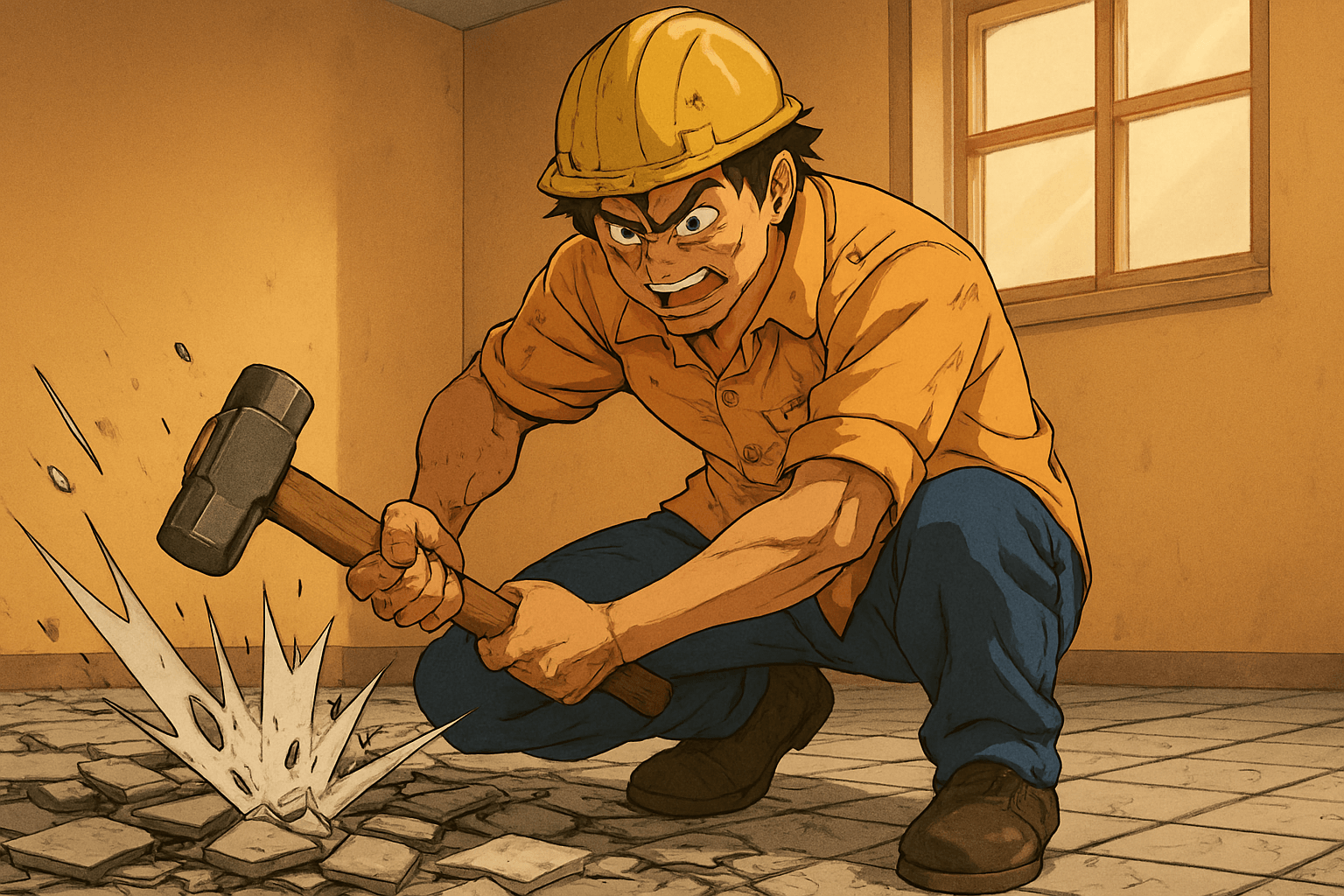
A man, a hammer, and a floor full of broken tiles
It started with a viral video. A labour, furious after being denied full wages, smashed the very tiles he had just laid in someone’s home. The footage, shared widely on Instagram and Reddit, sparked a firestorm of opinions. Some called it vandalism. Others called it justice.
One Redditor summed it up:
“They agreed to be paid for doing a job, they did the job and didn’t get paid, so they destroyed THEIR work… Argument, reasoning, and logic aren’t flawed, your ability to understand what’s being said is.”
Another chimed in:
“Do you know how you uninstall tiles? By breaking them… There’s no Ctrl+Z for tiles.”
This wasn’t just a tantrum. It was a protest. A desperate, destructive one — but a protest nonetheless. And it hit a nerve because it exposed a raw truth: India’s labour force, especially informal and contract workers, often gets the short end of the stick.
But here’s the twist: India’s labour laws just changed. And if you’re a worker, employer, or even someone hiring a mason for your kitchen, you need to know what’s new.
Why India needed new labour laws
India’s old labour laws were a mess. There were 29 different laws, many dating back to the British era. They were confusing, overlapping, and often ignored. For example:
- The Minimum Wages Act (1948) had different rates for different states and job types.
- The Factories Act (1948) applied only to certain workplaces, leaving many workers unprotected.
- The Industrial Disputes Act (1947) made it hard for small businesses to fire or hire without red tape.
The result? Only 10% of India’s workforce was formally protected. The rest — gig workers, daily wagers, contract labourers — were left to fend for themselves.
So the government decided to clean house. In 2020, Parliament passed four new labour codes. After delays, they finally came into force on 21 November 2025.
The Four Labour Codes
- Code on Wages, 2019
- Sets a national floor wage (minimum wage) across states.
- Defines “wages” clearly to stop salary-splitting tricks.
- Ensures equal pay for equal work, regardless of gender.
- Industrial Relations Code, 2020
- Makes it easier for companies to hire and fire — but also gives workers a clearer path to form unions.
- Introduces fixed-term employment with full benefits.
- Requires notice and compensation for layoffs in larger firms.
- Social Security Code, 2020
- Extends PF, ESI, gratuity to more workers, including gig and platform workers.
- Sets up a universal social security fund.
- Allows Aadhaar-based registration for faster access.
- Occupational Safety, Health and Working Conditions Code, 2020
- Consolidates 13 laws on workplace safety.
- Mandates free annual health check-ups for workers.
- Requires employers to provide clean toilets, drinking water, and safety gear.
The 50% Wage Rule: What’s the big deal?
One of the most talked-about changes is the “50% wage rule.” It says that at least 50% of your total salary (CTC) must be made up of basic pay + dearness allowance + retaining allowance. Why does this matter?
Because many companies used to inflate allowances (like travel, food, bonuses) to reduce PF and gratuity contributions. Now, those tricks won’t work.
For workers:
- Your PF and gratuity will increase, which is great for long-term savings.
- But your take-home pay may shrink a bit, since more goes into benefits.
For employers:
- Payroll costs may rise.
- Salary structures need to be reworked.
What this means for YOU (yes, you)
Whether you’re a salaried employee, a gig worker, or someone who hires help — these laws affect you.
If you’re a salaried employee:
- Check your payslip. Is your basic pay at least 50% of your CTC?
- Track your PF and ESI. Use the EPFO and ESIC portals to verify monthly contributions.
- Ask about gratuity. If you’ve worked for 5+ years, you’re entitled to it.
If you’re a gig worker (Swiggy, Zomato, Ola, etc.):
- You may now be eligible for social security benefits.
- Ask your platform about registration and contributions.
- Keep records of your work hours and payments.
If you’re a contractor or daily wager:
- You must be paid at least the minimum wage set by your state.
- You’re entitled to timely payment, safe working conditions, and rest breaks.
- If you’re injured on the job, you can claim compensation.
If you’re a small business owner or homeowner hiring help:
- You’re now more accountable.
- If you hire workers for construction, renovation, or events — you must pay fair wages.
- Verbal agreements won’t protect you in court.
Real voices, real rage
Let’s go back to that Reddit comments weren’t just about the tiles. They were about dignity.
“How is the homeowner entitled to the products of his labor if they are unwilling to pay the price agreed on?”
“I hope the claim is legit. It could be like the labour demanded extra kharcha pani, got denied and decided to go ‘Gurgaon’ on the tiles.”
“Okay. Vandalism is the most appropriate solution. Seems like your extensive real world experience is all from Bangladesh.”
The thread was a warzone of opinions. But beneath the sarcasm and snark, one thing was clear: people are tired of unfairness.
What to do if your rights are violated
- Document everything.
- Save appointment letters, WhatsApp chats, pay slips, and photos.
- These are your weapons in a dispute.
- Use official grievance portals.
- Shram Suvidha Portal
- EPFO Grievance Portal
- ESIC Portal
- Contact a union or legal aid group.
- Many NGOs offer free legal help to workers.
- Unions can negotiate on your behalf.
- File a complaint with the Labour Commissioner.
- Every district has one.
- You can file online or in person.
What’s still missing?
While the new codes are a step forward, critics point out gaps:
- Implementation is patchy. States must notify their own rules, and many haven’t yet.
- Gig workers still lack clarity. Platforms aren’t rushing to register them.
- Enforcement is weak. Labour inspectors are few, and corruption is a problem.
- Awareness is low. Most workers don’t even know these rights exist.
The road ahead
India has over 500 million workers, and most of them are in the informal sector. These new laws aim to bring them into the fold. But laws alone aren’t enough.
We need:
- Awareness campaigns in local languages.
- Simplified registration for social security.
- Stronger enforcement against wage theft.
- Digital tools to track work and payments.
The new labour codes are a big step: they promise clearer rules and wider protection but also mean short-term payroll changes and more paperwork for employers and workers alike. The man with the hammer may have broken tiles, but he also cracked open a conversation India can no longer ignore.